Reporting workflow: How EstateFoxy turns map evidence into client-ready outputs
How valuation reports, area reports, jobs, templates, and report evidence work together in EstateFoxy.
Reporting workflow: How EstateFoxy turns map evidence into client-ready outputs
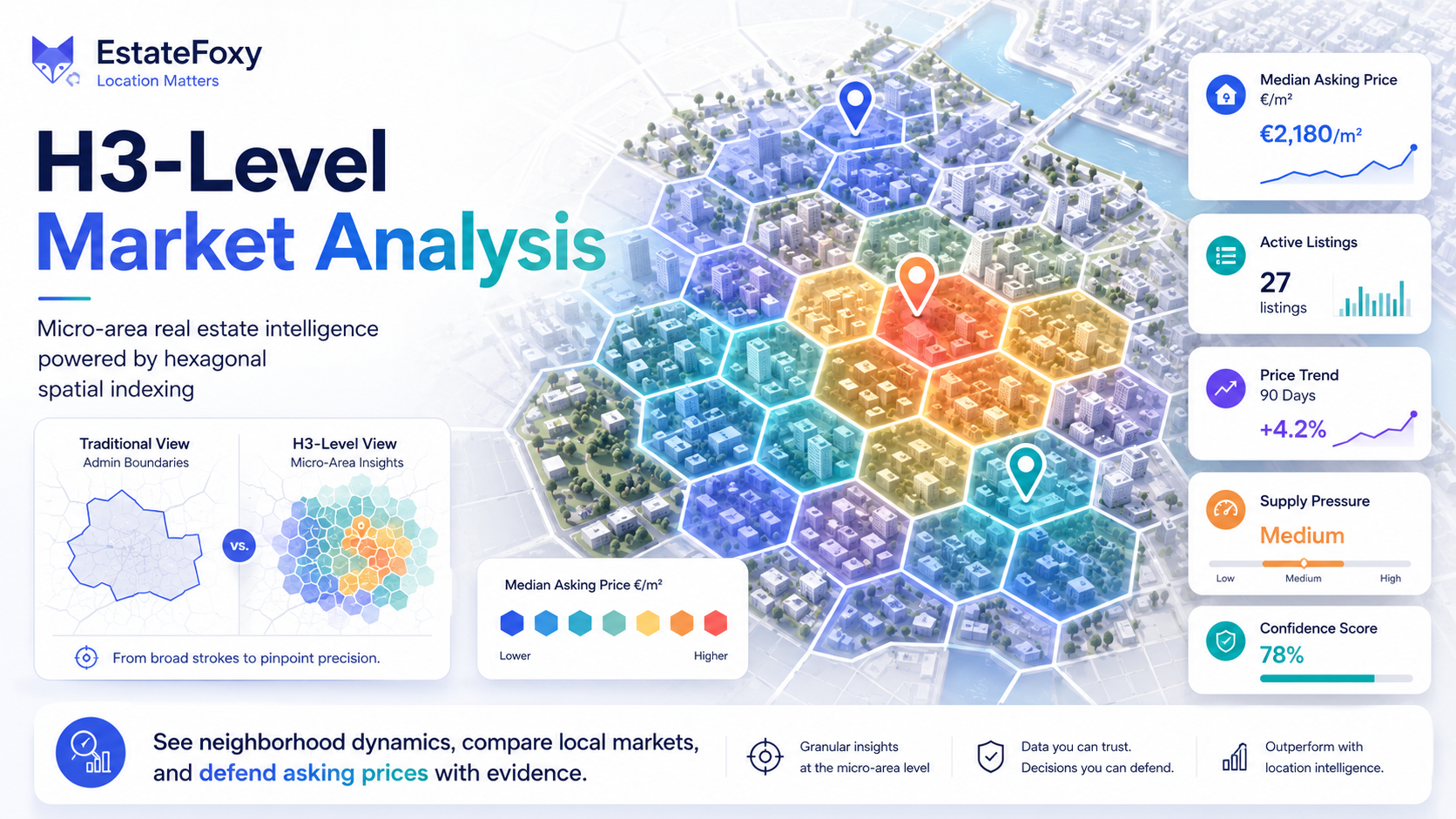
EstateFoxy reports are designed to solve a common business problem: professionals often understand an area, but turning that understanding into a clear client-ready document takes time. A report must include evidence, boundaries, assumptions, methodology, confidence, and interpretation. EstateFoxy connects the map and Market Insight workflow directly to report generation so the output is based on the same data the user inspected.
The reporting system is not a decorative export button. It is a structured workflow that begins with selected H3 cells and ends with a report artifact generated by the backend.
Report types
EstateFoxy supports two main professional report families: valuation reports and area reports.
A valuation report compares a subject property against selected market evidence. The user can enter property characteristics, asking price, size, and location context. The report can then explain price positioning, comparable market evidence, confidence, and local context.
An area report focuses on the selected H3 cell or group of cells. It summarises market level, location intelligence, amenities, demographics, terrain, coast distance, land cover, trends, risks, evidence completeness, and methodology.

Both report types use the same philosophy: define the area clearly, attach evidence, and explain what the evidence supports.
Why reports use background jobs
Report generation can involve data snapshots, rendering, storage, and download preparation. EstateFoxy runs reports as jobs instead of making the browser wait for heavy work inside a normal request.
This gives the business user a better workflow. They can submit a report, continue working, and return to the Jobs page to download or inspect completed output. It also gives administrators and developers a cleaner operational model because job status can be tracked.
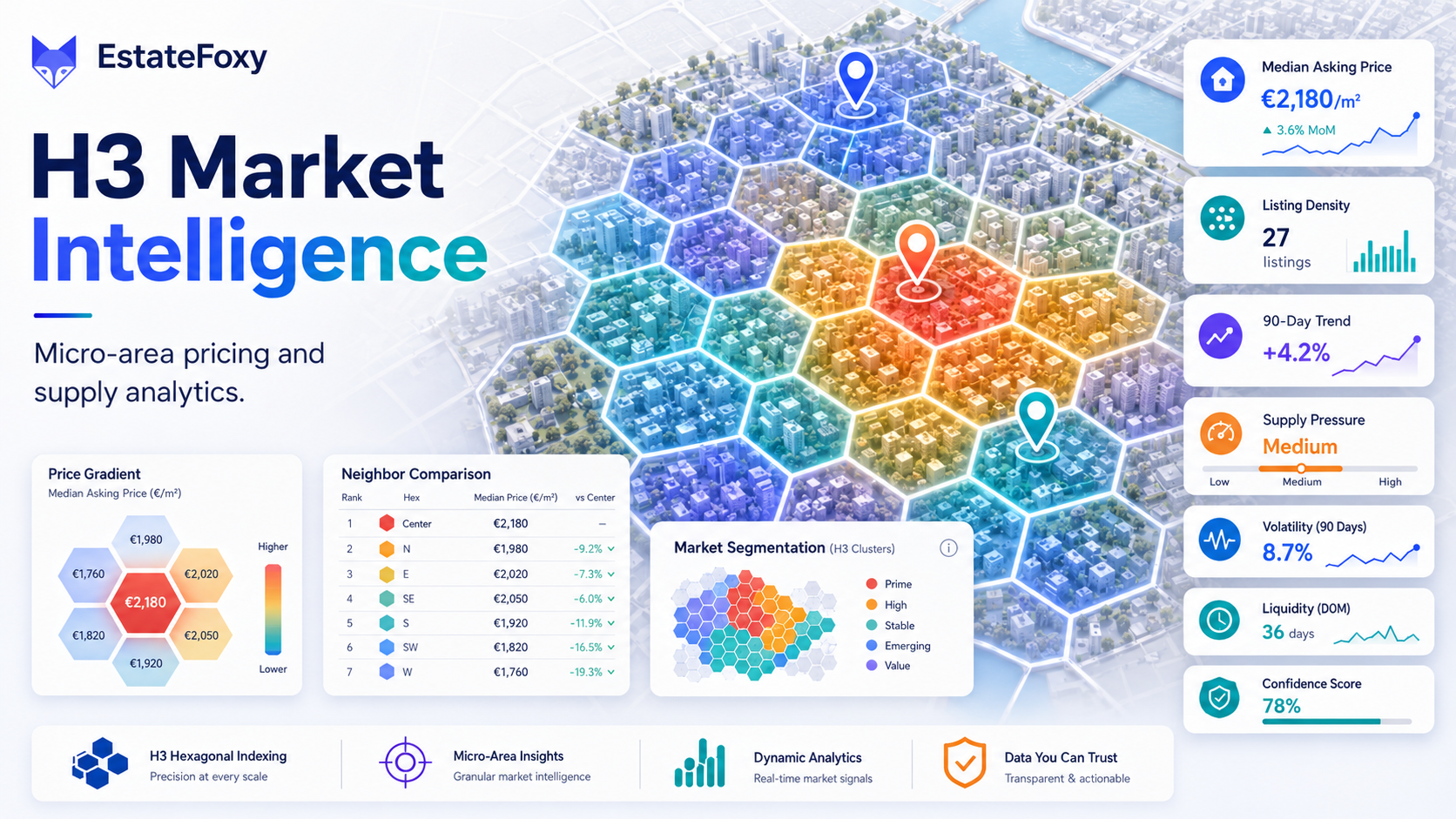
The job model also protects the product from unreliable long-running browser actions. Professional reports should be reproducible and auditable, not dependent on whether a tab stayed open.
What a good report includes
A useful real-estate intelligence report should include more than a price table. It should explain:
- What area was selected.
- Which market mode was used.
- How many listings support the evidence.
- What the price level and price trend show.
- Which amenities and location factors matter.
- Whether demographics, land cover, terrain, distance to sea, and risks are available.
- What confidence limitations should be disclosed.
- What the professional conclusion is.
EstateFoxy's report renderer is structured around these sections. The goal is to produce a document that can support conversation, not just a screenshot.
Report templates belong in admin
Template editing is an admin function. This is important for governance. If every user can change report templates, the organisation loses consistency. Admin-only templates allow the team to prepare a standard report style, methodology language, disclaimers, branding, and section logic.

The template system lets administrators manage prepared Jinja2 report templates for valuation and area reports. This separates report preparation from daily report use. Users can generate reports from approved templates, while admins control the structure.
Evidence snapshots
Reports should not silently change after they are created. A good report captures the evidence used at the time of generation. EstateFoxy's report workflow is built around request payloads, report snapshots, artifacts, and job status so the output can be traced.
This matters for professional trust. If a client asks why a recommendation was made, the user should be able to refer back to the selected cells, data context, and report output.
How reports support sales and advisory work
For agents, reports help explain pricing recommendations to sellers and buyers. For valuers, they support documented reasoning. For investors, they help compare locations. For agencies, they make team output more consistent.
The strongest report is not the one with the most sections. It is the one with the clearest logic. EstateFoxy is designed to keep that logic visible: market evidence, location evidence, confidence, interpretation, and limitation.
Practical takeaway
EstateFoxy reporting turns the map workspace into a professional output pipeline. Users select areas, inspect evidence, generate reports through jobs, and rely on admin-controlled templates for consistency. The result is a repeatable way to move from local market intelligence to client-ready documents.